
PIL vs IFU: What’s the Difference and How Does It Affect Your Print Specification?

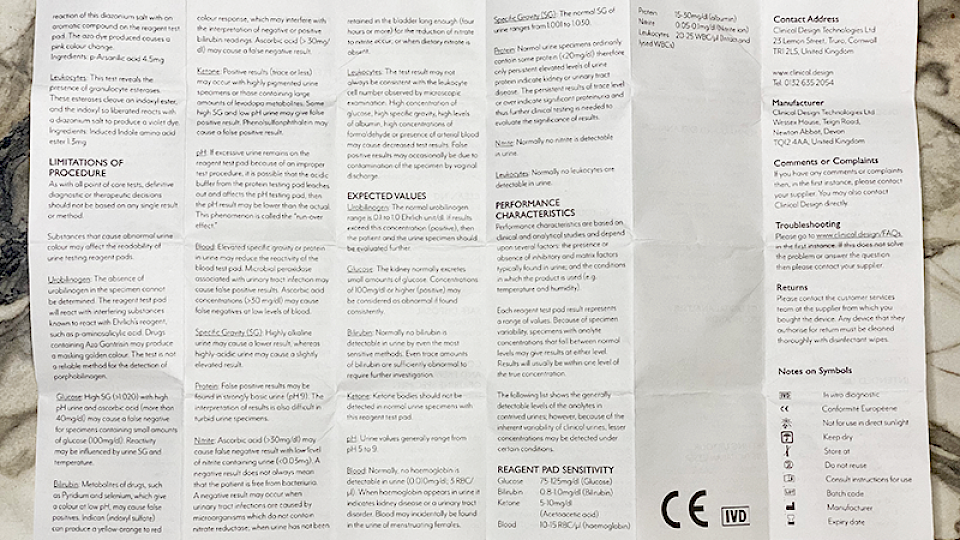
In pharmaceutical and healthcare printing, few terms create more confusion than PIL and IFU.
Are Patient Information Leaflet (PIL) and an Instructions for Use document (IFU) are the same thing. The short answer is: sometimes yes, sometimes no.
In many pharmaceutical print environments, the terms are used interchangeably because both refer to folded inserts supplied with a medicine, medical device, or healthcare product. However, there are also important distinctions in purpose, audience, regulatory context, and print specification.
Understanding those differences matters because even small changes in terminology can affect artwork setup, folding style, paper choice, pagination, and compliance requirements.
For pharma manufacturers, contract packers, and procurement teams, clarifying whether a project is technically a PIL, an IFU, or a hybrid document helps avoid production delays and ensures the printed insert performs correctly throughout the supply chain.
A PIL, or Patient Information Leaflet, is the printed information supplied with a medicinal product to help patients use it safely and correctly.
PILs are commonly included inside pharmaceutical cartons and contain information such as:
In the UK and across Europe, PILs are closely associated with regulated medicinal products and are designed primarily for the end patient.
From a print perspective, PILs are often characterised by:
Because space inside pharmaceutical packaging is limited, PIL printing often requires specialist lightweight papers and precision folding techniques.
IFU stands for Instructions for Use.
An IFU is a broader term that describes documentation explaining how to use a product safely and effectively. While IFUs can exist in pharmaceutical packaging, they are especially common in:
An IFU may contain patient-facing information, clinician instructions, assembly guidance, diagrams, procedural steps, or safety information.
Unlike a traditional PIL, an IFU is not always exclusively written for patients. In many cases, the intended audience may include healthcare professionals, laboratory staff, or clinical operators.
From a production standpoint, IFUs can vary significantly in complexity. Some resemble standard pharmaceutical leaflets, while others include:
This wider functional role means IFU printing specifications can differ considerably from standard PIL production.
This is where the confusion begins.
In practice, PILs and IFUs overlap heavily.
A pharmaceutical company may refer to an insert as an IFU internally, while a print supplier describes the same item as a PIL. In some cases, the document performs both functions simultaneously: it informs the patient while also providing operational instructions for safe use.
That is why the terms are often used interchangeably in pharmaceutical printing.
However, they are not always identical.
A useful way to think about it is:
So while every PIL could arguably function as an IFU, not every IFU would be considered a PIL.
The distinction becomes more important when defining technical print requirements.
Even when the physical format looks similar, the classification of the document can influence how the job is specified and produced.
PILs are typically highly text-heavy because they must include legally required patient information in a very limited space.
This often results in:
IFUs may also be dense, but they can include more visual content, diagrams, tables, or instructional formatting.
As a result, the overall pagination and panel structure may differ significantly.
One of the biggest production considerations for both PIL and IFU printing is fold engineering.
Pharmaceutical inserts frequently need to fit into extremely compact cartons while remaining machine-foldable and readable once opened.
Depending on the application, a specification may require:
IFUs with diagrams or procedural layouts may require larger open sizes than traditional PILs.
This affects both print layout and finishing setup.
Paper choice is critical in pharmaceutical leaflet printing.
Many PILs are printed on lightweight pharmaceutical-grade papers to reduce bulk while maintaining readability.
However, if an IFU contains diagrams, shaded sections, or dense graphical information, opacity and print clarity become even more important.
Choosing the wrong stock can create issues such as:
The intended use of the insert should always guide substrate selection.
Regulatory readability standards are a major factor in both PIL and IFU production.
Typography, spacing, contrast, and reproduction quality all influence usability.
For PIL printing in particular, consistency is essential because patient comprehension directly affects safe medicine usage.
IFUs for medical devices may also need to meet additional usability or device-labelling requirements depending on the market.
This is why pharmaceutical printers place strong emphasis on controlled reproduction processes and quality assurance.
Both PILs and IFUs often undergo frequent revisions.
Changes to dosage guidance, regulatory wording, translations, or device instructions can require rapid artwork updates.
That means print suppliers must manage:
In regulated sectors, traceability is just as important as print quality.
Many pharmaceutical inserts combine several languages into one leaflet to support multiple markets.
This dramatically increases text volume and folding complexity.
A multi-language PIL may require ultra-lightweight paper and highly engineered folding patterns simply to fit inside the carton.
Similarly, IFUs for international medical devices may include multiple languages, symbols, diagrams, and region-specific compliance information.
This is where specialist pharma print expertise becomes particularly valuable.
Whether a project is classified as a PIL or an IFU, pharmaceutical inserts demand precision manufacturing.
Key production considerations include:
Even minor production inconsistencies can create operational or compliance risks.
That is why pharmaceutical leaflet printing is typically handled by specialist print providers with experience in regulated healthcare sectors.
When sourcing PIL or IFU printing in the UK, it is important to work with a supplier that understands both the technical and regulatory demands of pharmaceutical print.
An experienced pharma print partner can help advise on:
They should also be able to support repeatability across multiple production runs, rapid version updates, and consistent quality control procedures. In pharmaceutical and healthcare environments, reliability is essential because inserts are not simply marketing materials — they are critical components of product communication and patient safety.
The distinction between a PIL and an IFU is not always clear-cut, which is why the two terms are so frequently used interchangeably within pharmaceutical printing.
In simple terms:
In many real-world applications, the same printed insert effectively performs both roles.
What matters most from a production perspective is not necessarily the label itself, but understanding the practical requirements behind the document. Content density, fold complexity, language count, readability standards, substrate selection, and regulatory traceability all influence how the insert should be manufactured.
By clearly defining whether your project functions as a PIL, an IFU, or a hybrid of both, you can create a more accurate print specification, reduce production risks, and ensure the finished insert performs correctly throughout packing, distribution, and end use.
For pharmaceutical manufacturers, healthcare companies, and contract packers, partnering with a specialist pharmaceutical print provider helps ensure those requirements are managed correctly from artwork through to final delivery.
Lanes Printers © 2026